Lesson 1 History of Yoga
HISTORY OF YOGA योग का इतिहास
The practice of Yoga is believed to have started with the very dawn of civilization.
माना जाता है कि योग का अभ्यास सभ्यता की शुरुआत के साथ ही शुरू हो गया था।
The science of yoga has its origin thousands of years ago, modern scholars have noted and marveled at the close parallels found between ancient cultures across the globe.
योग के विज्ञान की उत्पत्ति हजारों साल पहले हुई थी, आधुनिक विद्वानों ने इस पर ध्यान दिया और दुनिया भर में प्राचीन संस्कृतियों के बीच समानताएं पाई,जिसनेअचंभित किया।
However, it was in India that the yogic system found its fullest expression.
हालाँकि, यह भारत में था कि योग प्रणाली को अपनी पूर्ण अभिव्यक्ति मिली।
Agastya, the Saptarishi who travelled across the Indian subcontinent, crafted this culture around a
core yogic way of life.
अगस्त्य, सप्तर्षि जिन्होंने भारतीय उपमहाद्वीप में यात्रा की, ने इस संस्कृति को जीवन के मूल योगिक तरीके के आसपास तैयार किया।
A number of seals and fossil remains of Indus Saraswati valley civilization with Yotic motives and figures performing yoga indicate the presence of Yoga in India.
सिंधु सरस्वती घाटी सभ्यता की कई मुहरें और जीवाश्म अवशेष योटिक उद्देश्यों और योग करने वाली आकृतियों के साथ भारत में योग की उपस्थिति का संकेत देते हैं।
The phallic symbols, seals of idols of mother Goddess are suggestive of Tantra Yoga.
देवी मां की मूर्तियों के लैंगिक प्रतीक, मुहरें तंत्र योग के सूचक हैं।
Sun was given highest importance during the vedic period.
वैदिक काल में सूर्य को सर्वाधिक महत्व दिया गया था।
The practice of ‘Surya namaskara’ may have been invented later due to this influence.
हो सकता है कि इसी प्रभाव के कारण ‘सूर्य नमस्कार’ की प्रथा बाद में ईजाद की गई हो।
Pranayama was a part of daily ritual and to offer the oblation.
प्राणायाम दैनिक अनुष्ठान का एक हिस्सा था और आहुति देने के लिए था।
Though Yoga was being practiced in the pre-Vedic period, the great Sage Maharshi Patanjali systematized and codified the then existing practices of Yoga, its meaning and its related knowledge through his Yoga Sutras.
यद्यपि पूर्व-वैदिक काल में योग का अभ्यास किया जा रहा था, महान ऋषि महर्षि पतंजलि ने अपने योग सूत्र के माध्यम से योग की तत्कालीन मौजूदा प्रथाओं, इसके अर्थ और इसके संबंधित ज्ञान को व्यवस्थित और संहिताबद्ध किया।
After Patanjali, many Sages and Yoga Masters contributed greatly for the preservation and development of the field
through their well-documented practices and literature.
पतंजलि के बाद, कई ऋषियों और योग गुरुओं ने क्षेत्र के संरक्षण और विकास के लिए बहुत योगदान दिया उनकी अच्छी तरह से प्रलेखित प्रथाओं और साहित्य के माध्यम से।
Surya Namaskara Historical evidences of the existence of Yoga were seen in the pre-Vedic period (2700 B.C.), and thereafter till Patanjali’s period.
सूर्य नमस्कार योग के अस्तित्व के ऐतिहासिक साक्ष्य पूर्व-वैदिक काल (2700 ईसा पूर्व) में देखे गए, और उसके बाद पतंजलि के काल तक।
The main sources, from which we get the information about Yoga practices and the related literature during this period, are available in Vedas(4), Upanishads(108), Smritis, teachings of Buddhism, Jainism, Panini, Epics (2), Puranas (18) etc.
जिन मुख्य स्रोतों से हमें इस अवधि के दौरान योग प्रथाओं और संबंधित साहित्य के बारे में जानकारी मिलती है, वे वेदों (4), उपनिषदों (108), स्मृतियों, बौद्ध धर्म की शिक्षाओं, जैन धर्म, पाणिनि, महाकाव्यों (2), पुराणों (18) आदि में उपलब्ध हैं।
Tentatively the period between 500 BC – 800 A.D. is considered as the Classical period which is also considered as the most fertile and prominent period in the history and development of Yoga.
अनुमानित रूप से 500 ईसा पूर्व – 800 ईस्वी के बीच की अवधि को शास्त्रीय काल माना जाता है जो है योग के इतिहास और विकास में सबसे उर्वर और प्रमुख अवधि के रूप में भी माना जाता है।
During this period, commentaries of Vyasa on Yoga Sutras and Bhagawad Gita etc. came into existence.
इस अवधि के दौरान, योग सूत्र और भगवद गीता आदि पर व्यास की टिप्पणी अस्तित्व में आई।
This period can be mainly dedicated to two great religious teachers of India –Mahavir and Buddha.
यह अवधि मुख्य रूप से भारत के दो महान धर्मगुरुओं-महावीर और बुद्ध को समर्पित की जा सकती है।
The concept of Five great vows – Panchamahavrata-by Mahavir and AshtaMagga or eightfold path by Buddha – can be well considered as early nature of Yoga sadhana.
पांच महाव्रतों की अवधारणा – महावीर द्वारा पंचमहाव्रत और बुद्ध द्वारा अष्टमग्गा या आठ गुना मार्ग – को योग साधना की प्रारंभिक प्रकृति के रूप में माना जा सकता है।
We find its more explicit explanation in Bhagawad Gita which has elaborately presented the concept of Gyan yoga, Bhakti yoga and Karma Yoga.
इसकी अधिक स्पष्ट व्याख्या हमें भगवद गीता में मिलती है जिसमें ज्ञान योग, भक्ति योग और कर्म योग की अवधारणा को विस्तृत रूप से प्रस्तुत किया गया है।
These three types of yoga are still the highest example of human wisdom and even today people find peace by following the methods as shown in Gita.
ये तीन प्रकार के योग अभी भी मानव ज्ञान का सर्वोच्च उदाहरण हैं और आज भी लोग गीता में बताए गए तरीकों का पालन करके शांति पाते हैं।
Patanjali’s yoga sutra besides containing various aspects of yoga, is mainly identified with eight fold path of Yoga.
पतंजलि के योग सूत्र में योग के विभिन्न पहलुओं को समाहित करने के अलावा मुख्य रूप से योग के आठ गुना मार्ग की पहचान की गई है।
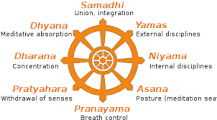
The eight limbs of yoga are yama (abstinences), niyama (observances), asana (yoga postures), pranayama (breath control), pratyahara (withdrawal of the senses), dharana (concentration), dhyana (meditation) and samadhi (absorption).”
योग के आठ अंग हैं यम (संयम), नियम (पालन), आसन (योग आसन), प्राणायाम (श्वास नियंत्रण), प्रत्याहार (इंद्रियों को वापस लेना), धारणा (एकाग्रता), ध्यान (ध्यान) और समाधि (अवशोषण)। “
The very important commentary on Yoga sutra by Vyasa was also written.
व्यास द्वारा योग सूत्र पर अत्यंत महत्वपूर्ण भाष्य भी लिखा गया था।
During this very period the aspect of mind was given importance and it was clearly brought out through Yoga sadhana, Mind and body both can be brought under control to experience equanimity.
इसी काल में मन के पहलू को महत्व दिया गया और इसे योग साधना के माध्यम से स्पष्ट रूप से सामने लाया गया, समभाव का अनुभव करने के लिए मन और शरीर दोनों को नियंत्रण में लाया जा सकता है।
The period between 800 A.D. – 1700 A.D. has been recognized as the Post Classical period.
800 A.D. – 1700 A.D के बीच की अवधि को उत्तर शास्त्रीय काल के रूप में मान्यता दी गई है।
The period between 1700 – 1900 A.D. is considered as Modern period in which the great Yogacharyas-
RamanaMaharshi, Ramakrishna Paramhansa, ParamhansaYogananda, Vivekananda etc. have contributed for the development of Raja Yoga.
1700 – 1900 ई. के बीच की अवधि को आधुनिक काल माना जाता है जिसमें महान योगाचार्य- रमण महर्षि, रामकृष्ण परमहंस, परमहंस योगानंद, विवेकानंद आदि ने राजयोग के विकास में योगदान दिया है।
This was the period when Vedanta, Bhakti yoga, Natha-yoga or Hatha-yoga flourished.
यह वह समय था जब वेदांत, भक्ति योग, नाथ-योग या हठ-योग का विकास हुआ।
The Shadanga-yoga of Goraksha shatakam, Chaturanga-yoga of Hathayoga pradipika, Saptanga-yoga of
Gheranda Samhita, were the main tenents of Hatha-yoga.
गोरक्षशतकम का षडंग-योग, हठयोगप्रदीपिका का चतुरंग-योग, का सप्तांग-योग घेरंडा संहिता, हठ-योग के मुख्य सिद्धांत थे।